-
 How to select a right antenna?
Sep , 27 2024
How to select a right antenna?
Sep , 27 2024
How to choose a right antenna: Guid: When it comes to getting the best signal for your devices, choosing the right antenna is crucial. With so many options available, including ceiling antennas, flat panel antennas, and Yagi antennas, it can be a bit overwhelming. Here’s a simple guide to help you make the right choice! 1. Understand Your Needs: First things first, think about what you need ...
View more
-
The Role of Passive RF Components in Advancing IoT Connectivity
Nov , 16 2024
As the Internet of Things (IoT) continues to revolutionize industries and everyday life, the demand for efficient and reliable wireless communication grows exponentially. Central to this transformation are passive RF components, including filters, antennas, duplexers, and cables, which play a vital role in ensuring the seamless operation of IoT networks. RF Filters: Enhancing Signal Clarity In IoT...
View more
-
What is omni-directional ceiling-mounted antenna?
Nov , 30 2024
The omni-directional ceiling-mounted antenna is a versatile and efficient communication device designed for indoor use. As its name suggests, this antenna is mounted on the ceiling, offering a discreet and space-saving solution for enhancing wireless signal coverage within a building. The key feature of this antenna lies in its omni-directional radiation pattern. Unlike directional antennas that f...
View more
-
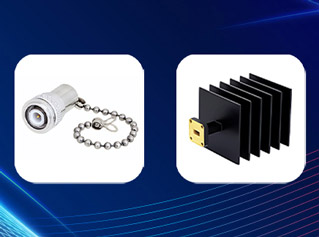 Common waveguide components: waveguide terminals
Mar , 18 2025
Common waveguide components: waveguide terminals
Mar , 18 2025
2. Waveguide Terminals 2.1 Performance Characteristics Key electrical parameters include frequency range (determined by waveguide dimensions), VSWR, and input power handling. Physical attributes like size, weight, and material selection (e.g., corrosion-resistant plating) are equally vital. Thermal management strategies vary: 2.2 Materials and Applications A waveguide terminal typically consists o...
View more
-
Analysis of Directional Coupler Applications: Core Technology in Modern Communication and Testing Systems
Mar , 26 2025
In wireless communications, radar systems, RF testing, and other fields, the directional coupler stands as a critical passive component, enabling unique signal separation and monitoring capabilities that make it indispensable in modern electronic systems. This article delves into the working principles, core advantages, and real-world applications of directional couplers across industrie...
View more
-
What is an RF Filter?
Apr , 18 2025
In high-frequency electronic systems like wireless communications, radar systems, and medical devices, RF filters (Radio Frequency Filters) act as "traffic controllers" for signals. These critical components precisely screen specific frequency ranges, ensuring optimal device performance. This article breaks down the core technology behind RF filters and addresses key selection criteria e...
View more
-
5G-Advanced Accelerates New Requirements for In-building RF Infrastructure
Apr , 28 2025
As 5G-Advanced (5G-A) technology emerges, it brings higher speeds, lower latency, and smarter network capabilities, reshaping expectations for in-building wireless systems. Modern facilities—such as offices, airports, and hospitals—now require more advanced Distributed Antenna Systems (DAS) capable of supporting higher frequency bands and broader bandwidths. Traditional infrastructure must evolve....
View more
-
Why Use a Hybrid Coupler? Understanding Its Role in RF Systems
May , 14 2025
In RF and microwave systems, signal routing, splitting, and combining require high-precision components that minimize losses and distortion. One such essential component is the hybrid coupler. But why use a hybrid coupler instead of standard power dividers or directional couplers? This article explores the purpose, benefits, and applications of hybrid couplers—especially in systems where signal ph...
View more