-
 What Is the Difference Between a Power Divider and a Power Splitter?
Jun , 18 2025
1. Basic Function — What Do They Both Do? At a high level, both power splitters and power dividers are passive RF components designed to: Take one input signal Split it into two or more output signals Maintain specific impedance (typically 50Ω or 75Ω) Preserve signal integrity as much as possible These devices are commonly used in test setups, antenna feeds, distributed antenna systems (DAS), and ...
View more
-
What's the Difference Between Microstrip and Cavity Power Dividers?
Jun , 26 2025
1. What Is a Microstrip Power Divider? A microstrip power divider is fabricated using PCB (printed circuit board) technology. It typically consists of microstrip lines, branch networks, and resistors. Often based on Wilkinson design principles, microstrip dividers offer good impedance matching and moderate port isolation. Key Features of Microstrip Power Dividers: Compact and lightweight — Ideal f...
View more
-
How Do Filters Work?
Jul , 02 2025
What Is an RF Filter? An RF filter is a passive or active component that allows signals within a certain frequency range to pass while attenuating signals outside that range. Filters are essential in both transmit and receive chains to isolate specific frequencies and prevent crosstalk, interference, or signal distortion. Types of Filters by Frequency Selection Depending on the application, filter...
View more
-
How Filters Improve Network Quality and Reduce Interference
Sep , 13 2025
In modern communication networks, operators face a constant challenge: ensuring reliable, high-quality signal transmission while managing limited spectrum resources. With the rapid deployment of 4G and 5G networks, along with growing adoption of Distributed Antenna Systems (DAS) and indoor coverage solutions, RF passive components—particularly filters—have become essential tools for network optimi...
View more
-
Without Understanding Resonators, You Can’t Truly Understand Filters
Sep , 17 2025
In modern communication systems, the RF filter is one of the most critical passive components. Whether in macro base stations, Distributed Antenna Systems (DAS/IBS), or in environments where 5G and 4G networks coexist, filters play a central role in suppressing interference and ensuring signal quality. However, the true performance of a filter is not determined by its housing or connectors, but by...
View more
-
Choosing the Right Power Splitter: Wilkinson vs. Cavity vs. UHF
Nov , 14 2025
In RF passive networks, a power splitter may look simple, but choosing the wrong type can directly impact system stability, coverage balance, and long-term reliability. Below, we take three representative models as engineering cases—a 350–2700 MHz 50W Wilkinson splitter, a 698–7125 MHz cavity splitter, and a 450–512 MHz UHF 4-way Wilkinson splitter—to break down how to select the correct product f...
View more
-
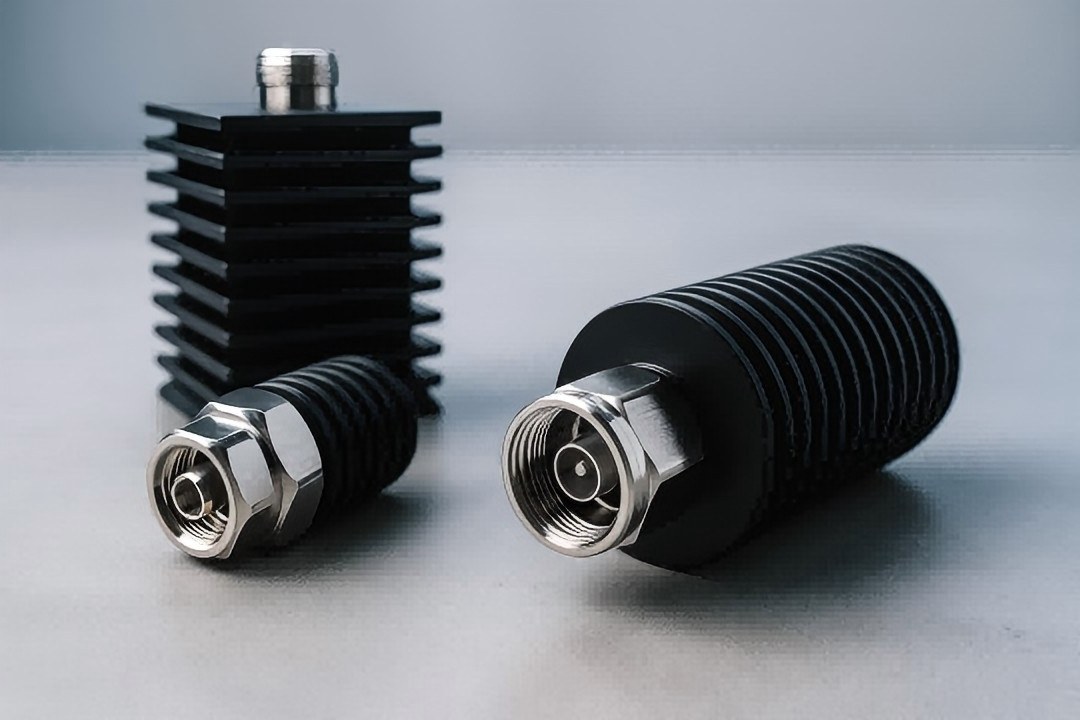 Termination Loads in RF Systems: The Indispensable Anchor of Stability
Jan , 05 2026
In RF systems or communication base stations, the Termination Load is a seemingly simple yet critically important passive component. Its role extends beyond merely "absorbing signals" and encompasses system stability, Passive Intermodulation (PIM) control, link testing, and system security. This article will delve into the functions of termination loads within such systems and provide guidance on ...
View more
-
Duplexer vs Combiner: Key Differences in RF Communication Systems
Mar , 07 2026
Duplexers and RF Combiners are both used in RF communication systems to manage and transmit signals. Many engineers or system designers sometimes confuse these two devices because they may appear in similar positions within a network architecture. However, in real-world deployments such as 5G networks, DAS systems, and wireless communication infrastructure, they perform very different functions. F...
View more