-
 What is the indoor distribution system?
Sep , 10 2021
What is the indoor distribution system?
Sep , 10 2021
What is the indoor distribution system? Indoor distribution system is used to cover the indoor blind area of the system, the signal into the indoor through indoor installation of antennas, feeders, power dividers, couplers and other devices to achieve the purpose of coverage Indoor distribution system is a successful scheme for indoor user groups to improve the mobile communication environment in ...
View more
-
What is 5G
Dec , 11 2021
5G (Fifth Generation Mobile Network) is the latest generation of mobile communication technology designed to deliver faster data speed, lower latency, and massive connectivity compared to previous generations such as 4G LTE, 3G, and 2G. Unlike earlier mobile generations, 5G is not a single wireless technology. It is a complete communication system that integrates multiple radio access technologies...
View more
-
Main applications of RF circulators
Dec , 23 2023
RF circulators are used in a variety of RF circuit design applications. Typically they tend to be used at microwave frequencies, hence they are often referred to as microwave circulators. RF circulators are used as duplexers in many RF applications to allow for simultaneous transmit and receive functions, and they are used in a wide range of RF design applications, including radar systems and a va...
View more
-
What is an indoor distribution system
Jul , 01 2024
Indoor distribution system is a solution to improve the mobile communication environment in buildings for indoor users. Indoor distribution system makes use of indoor antenna to distribute the signal evenly in every corner of the room, so as to ensure that the indoor area has an ideal signal coverage. Why build an indoor distribution system? With the rapid growth of mobile users in cities and the ...
View more
-
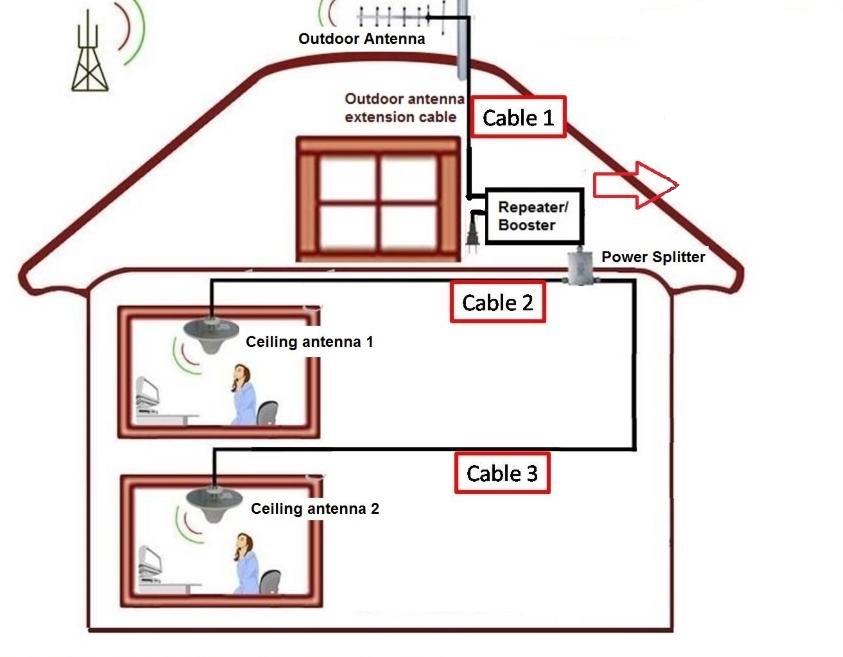 Introduction to BDA System Components: Key Products, Considerations, and Global Insights
Mar , 13 2025
Introduction to BDA System Components: Key Products, Considerations, and Global Insights
Mar , 13 2025
A BDA system amplifies and redistributes weak signals to ensure consistent coverage. Key components include: Regulatory Compliance: Ensure adherence to local standards (e.g., FCC (USA), CE (EU), SRRC (China)) to avoid interference and legal penalties. Interference Management: Use shielded cables and isolators to prevent feedback loops. Signal Balancing: Optimize amplifier gain settings to avoid os...
View more
-
Optimizing Passive Components for Better 5G DAS Coverage
Aug , 13 2025
With the rapid deployment of 5G in indoor environments, Distributed Antenna Systems (DAS) have become a critical solution to ensure reliable signal coverage. Although passive RF components in DAS are non-powered, their performance directly affects signal transmission quality and overall system stability. Selecting and optimizing these passive components is key to enhancing indoor 5G network covera...
View more
-
4.3-10 vs. N-Type Connectors: Which Interface Offers Better PIM Stability for Passive Components?
Apr , 03 2026
In the field of Radio Frequency (RF) engineering, connectors are often thought of as basic mechanical connections. But in 5G and future 6G networks, the type of connector you choose directly affects spectral efficiency and Signal-to-Noise Ratio (SNR). As multi-carrier, high-power, and high-frequency applications have grown, Passive Intermodulation (PIM) has become the "number one killer" of networ...
View more
-
Passive DAS vs. Active DAS Pros, Cons & Best Use Cases — A Technical Deep Dive
Jun , 06 2026
1. Why compare these two architectures? Over 80% of mobile communications happen indoors. Office concrete, shopping mall metal structures, hospital shielding — all block signals. You need a way to bring the signal from outside to the inside. A Distributed Antenna System does exactly that. It takes one signal source and distributes RF via coaxial cable or fiber to every antenna inside a building. B...
View more