-
 What Is a Coaxial Variable Attenuator and Why Is It Important?
Jun , 03 2025
What Is a Coaxial Variable Attenuator and Why Is It Important?
Jun , 03 2025
In RF and microwave communication systems, precise control over signal strength is critical. A coaxial variable attenuator is a key component used to adjust the amplitude of RF signals without distorting the waveform. Whether you're testing signal paths, protecting sensitive equipment, or balancing signal levels in a network, variable attenuators offer both flexibility and accuracy. What Is a Coax...
View more
-
What Is the Difference Between a Power Divider and a Power Splitter?
Jun , 18 2025
1. Basic Function — What Do They Both Do? At a high level, both power splitters and power dividers are passive RF components designed to: Take one input signal Split it into two or more output signals Maintain specific impedance (typically 50Ω or 75Ω) Preserve signal integrity as much as possible These devices are commonly used in test setups, antenna feeds, distributed antenna systems (DAS), and ...
View more
-
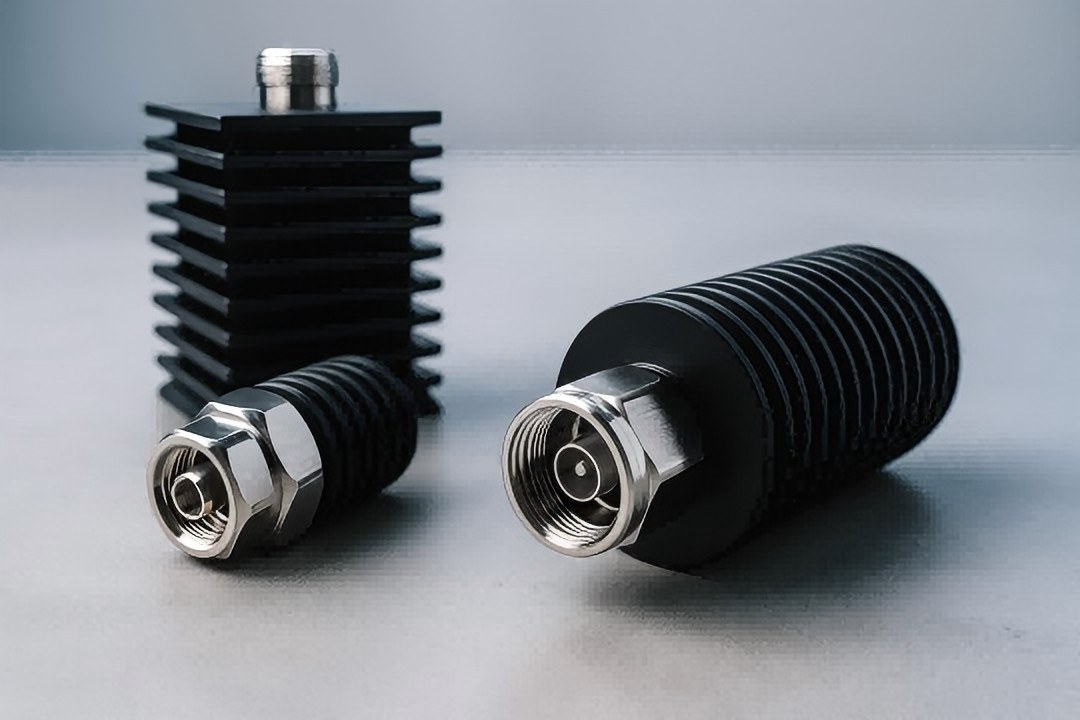 Termination Loads in RF Systems: The Indispensable Anchor of Stability
Jan , 05 2026
Termination Loads in RF Systems: The Indispensable Anchor of Stability
Jan , 05 2026
In RF systems or communication base stations, the Termination Load is a seemingly simple yet critically important passive component. Its role extends beyond merely "absorbing signals" and encompasses system stability, Passive Intermodulation (PIM) control, link testing, and system security. This article will delve into the functions of termination loads within such systems and provide guidance on ...
View more
-
Duplexer vs Combiner: Key Differences in RF Communication Systems
Mar , 07 2026
Duplexers and RF Combiners are both used in RF communication systems to manage and transmit signals. Many engineers or system designers sometimes confuse these two devices because they may appear in similar positions within a network architecture. However, in real-world deployments such as 5G networks, DAS systems, and wireless communication infrastructure, they perform very different functions. F...
View more
-
Can a Power Divider Be Used as a Combiner?
Apr , 25 2026
In RF system design and deployment, one common question often arises: Can a power divider be used in reverse as a power combiner? From a theoretical standpoint, the answer is yes. However, in real-world engineering applications, this practice comes with several hidden risks. If not handled properly, it can degrade system performance or even damage critical components. In this article, we’ll break ...
View more
-
Why Can’t a Power Divider Replace a Tapper in Indoor DAS?
Jun , 23 2026
Anyone who has worked on in‑building DAS eventually hits this problem: the main line signal is strong, but by the time it reaches the far‑end antenna port, there's almost nothing left. If you split it with power dividers all the way, each split makes it weaker, and the far end can't even get a phone registered. Then someone tells you — use a tapper. But what exactly is a tapper? How is it differen...
View more
-
What Makes a Tapper Indispensable for Long-Distance Indoor Coverage?
Jun , 30 2026
Anyone who has designed or deployed a Distributed Antenna System for a tunnel, a subway, or a 200‑meter office corridor knows this problem: the signal at the head‑end is strong, but by the time it reaches the far end, there's barely enough to keep a call connected. You can crank up the source power. You can add line amplifiers. But at some point, the physics of coaxial cable catches up with you. A...
View more
-
PIM Interference vs. External Interference: How to Quickly Tell Them Apart On‑Site?
Jul , 07 2026
Anyone who does base‑station maintenance or network optimisation eventually runs into this: uplink noise floor spikes, users complain about dropped calls and low throughput, yet VSWR tests pass and there are no equipment alarms. Where is the problem? At this point, you have two possible culprits – PIM (passive intermodulation) interference generated inside your own system, or external RF interfere...
View more