-
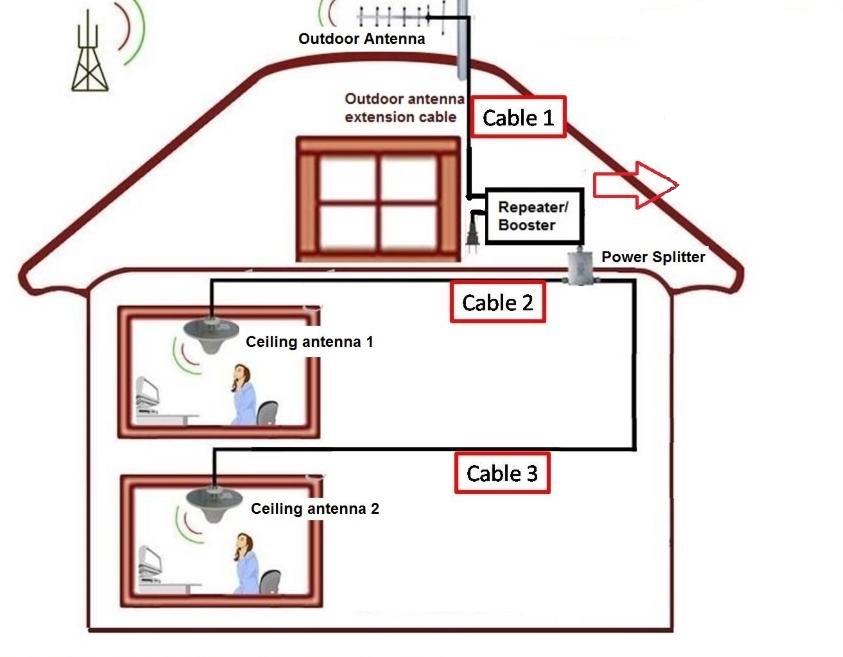 Introduction to BDA System Components: Key Products, Considerations, and Global Insights
Mar , 13 2025
Introduction to BDA System Components: Key Products, Considerations, and Global Insights
Mar , 13 2025
A BDA system amplifies and redistributes weak signals to ensure consistent coverage. Key components include: Regulatory Compliance: Ensure adherence to local standards (e.g., FCC (USA), CE (EU), SRRC (China)) to avoid interference and legal penalties. Interference Management: Use shielded cables and isolators to prevent feedback loops. Signal Balancing: Optimize amplifier gain settings to avoid os...
View more
-
 Active vs Passive RF Components: Key Differences and Applications
Apr , 14 2025
Active vs Passive RF Components: Key Differences and Applications
Apr , 14 2025
Introduction In wireless communication, radar systems, and IoT devices, radio frequency (RF) components are critical for signal processing. Understanding the differences between active RF components and passive RF components is essential for circuit design, cost optimization, and performance enhancement. This article explores their core distinctions through technical ...
View more
-
5G-Advanced Accelerates New Requirements for In-building RF Infrastructure
Apr , 28 2025
As 5G-Advanced (5G-A) technology emerges, it brings higher speeds, lower latency, and smarter network capabilities, reshaping expectations for in-building wireless systems. Modern facilities—such as offices, airports, and hospitals—now require more advanced Distributed Antenna Systems (DAS) capable of supporting higher frequency bands and broader bandwidths. Traditional infrastructure must evolve....
View more
-
Which Is Better: Directional Coupler or Tapper?
May , 08 2025
In RF and microwave systems, power distribution is a critical aspect that directly impacts system performance, reliability, and design flexibility. Two of the most commonly used passive components for signal splitting and power monitoring are directional couplers and tappers. While they serve similar purposes in many systems, they differ significantly in structure, application, and performance. Un...
View more
-
Common Connector Types for RF Passive Components
Jun , 10 2025
In the world of RF passive components—such as couplers, attenuators, splitters, and terminators—RF connectors play a crucial role in ensuring signal integrity, mechanical reliability, and ease of integration. Choosing the right connector is essential for system performance, especially in 4G/5G base stations, DAS (Distributed Antenna Systems), and other high-frequency communication systems. Below, ...
View more
-
Understanding Low PIM in RF Passive Components: Why It Matters
Jul , 17 2025
What is PIM and Why "Low" PIM is Critical? PIM stands for Passive Intermodulation, a form of signal distortion that occurs when two or more high-power RF signals mix within a passive component—such as connectors, cables, power splitters, couplers, or antennas—and create unwanted interference at new frequencies. These new frequencies can degrade system performance, reduce data throughput, and affec...
View more
-
Public Safety DAS Solutions: Key RF Components and Applications
Jul , 19 2025
In the fast-evolving communication industry, Public Safety Distributed Antenna Systems (DAS) play a critical role in ensuring reliable coverage for emergency responders and critical infrastructure. These systems rely on advanced RF components to optimize signal distribution. Three key elements—Yagi Antenna, Power Divider, and Directional Coupler—are essential for their functionality. 1. Yagi Anten...
View more
-
Key Trends Driving the RF Industry Forward
Jul , 26 2025
The RF industry is experiencing rapid growth as new technologies and applications reshape the market. With the global demand for faster, more reliable wireless communication, RF components have become more critical than ever. 5G and Beyond The global rollout of 5G networks has significantly boosted the demand for RF components such as power splitters, couplers, and antennas. In addition, research ...
View more