-
 Introduction to BDA System Components: Key Products, Considerations, and Global Insights
Mar , 13 2025
Introduction to BDA System Components: Key Products, Considerations, and Global Insights
Mar , 13 2025
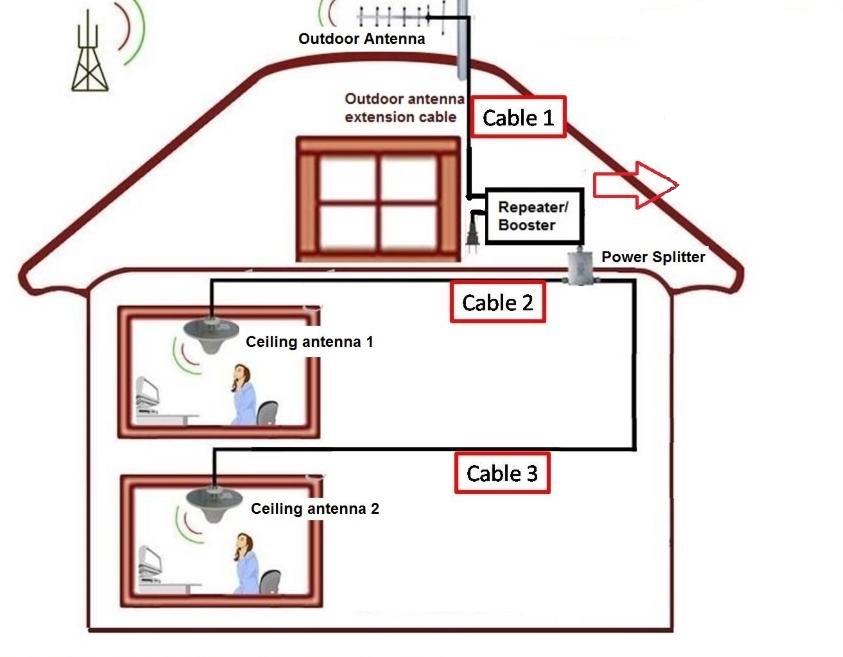
A BDA system amplifies and redistributes weak signals to ensure consistent coverage. Key components include: Regulatory Compliance: Ensure adherence to local standards (e.g., FCC (USA), CE (EU), SRRC (China)) to avoid interference and legal penalties. Interference Management: Use shielded cables and isolators to prevent feedback loops. Signal Balancing: Optimize amplifier gain settings to avoid os...
View more
-
 5G-Advanced Accelerates New Requirements for In-building RF Infrastructure
Apr , 28 2025
5G-Advanced Accelerates New Requirements for In-building RF Infrastructure
Apr , 28 2025
As 5G-Advanced (5G-A) technology emerges, it brings higher speeds, lower latency, and smarter network capabilities, reshaping expectations for in-building wireless systems. Modern facilities—such as offices, airports, and hospitals—now require more advanced Distributed Antenna Systems (DAS) capable of supporting higher frequency bands and broader bandwidths. Traditional infrastructure must evolve....
View more
-
Which Is Better: Directional Coupler or Tapper?
May , 08 2025
In RF and microwave systems, power distribution is a critical aspect that directly impacts system performance, reliability, and design flexibility. Two of the most commonly used passive components for signal splitting and power monitoring are directional couplers and tappers. While they serve similar purposes in many systems, they differ significantly in structure, application, and performance. Un...
View more
-
Public Safety DAS Solutions: Key RF Components and Applications
Jul , 19 2025
In the fast-evolving communication industry, Public Safety Distributed Antenna Systems (DAS) play a critical role in ensuring reliable coverage for emergency responders and critical infrastructure. These systems rely on advanced RF components to optimize signal distribution. Three key elements—Yagi Antenna, Power Divider, and Directional Coupler—are essential for their functionality. 1. Yagi Anten...
View more
-
Optimizing Passive Components for Better 5G DAS Coverage
Aug , 13 2025
With the rapid deployment of 5G in indoor environments, Distributed Antenna Systems (DAS) have become a critical solution to ensure reliable signal coverage. Although passive RF components in DAS are non-powered, their performance directly affects signal transmission quality and overall system stability. Selecting and optimizing these passive components is key to enhancing indoor 5G network covera...
View more
-
Design Tips for DAS Power Splitters, Couplers, and Combiners
Aug , 21 2025
In modern communication networks, DAS (Distributed Antenna System) plays a critical role in ensuring high-quality indoor and outdoor signal coverage. The performance of a DAS network not only depends on antenna placement but also heavily relies on core RF components such as power splitters, directional couplers, and combiners. Proper design, selection, and installation of these components directly...
View more
-
Why Is Tapper an Indispensable Passive Component for Indoor Coverage?
Jan , 17 2026
In the field of mobile communication engineering, the success of an Indoor Distribution System (DAS) depends not on the raw power of the signal source, but on the "art of distribution." As 5G transitions toward Sub-6GHz and higher frequency bands, space path loss and feeder attenuation increase drastically. To achieve seamless "carpet-style" coverage in complex skyscrapers or underground facilitie...
View more
-
Low PIM and Low Insertion Loss: Key Metrics That Define Real RF System Performance
Feb , 09 2026
In modern wireless systems such as 5G, DAS (Distributed Antenna Systems), private networks, SATCOM, and public safety communications, engineers often focus on baseband units, RF modules, spectrum resources, and algorithms. However, once a system is deployed in real environments — office buildings, airports, tunnels, ships, or macro sites — the actual performance ceiling is usually determined by a ...
View more