-
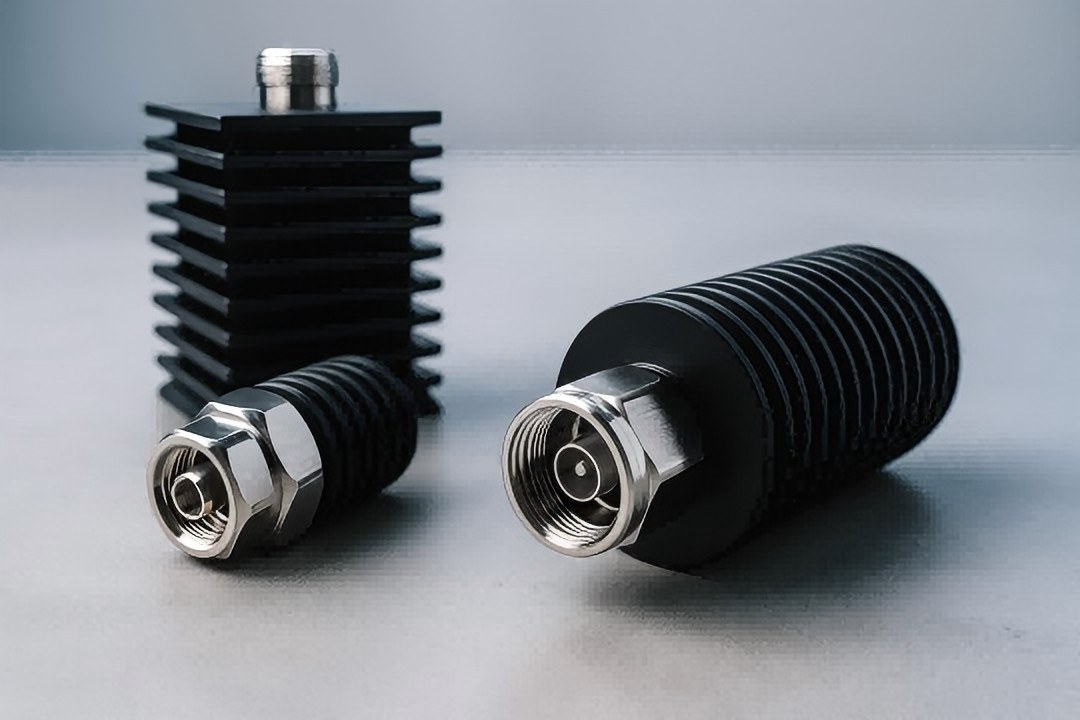 Termination Loads in RF Systems: The Indispensable Anchor of Stability
Jan , 05 2026
Termination Loads in RF Systems: The Indispensable Anchor of Stability
Jan , 05 2026
In RF systems or communication base stations, the Termination Load is a seemingly simple yet critically important passive component. Its role extends beyond merely "absorbing signals" and encompasses system stability, Passive Intermodulation (PIM) control, link testing, and system security. This article will delve into the functions of termination loads within such systems and provide guidance on ...
View more
-
 Why Is Tapper an Indispensable Passive Component for Indoor Coverage?
Jan , 17 2026
Why Is Tapper an Indispensable Passive Component for Indoor Coverage?
Jan , 17 2026
In the field of mobile communication engineering, the success of an Indoor Distribution System (DAS) depends not on the raw power of the signal source, but on the "art of distribution." As 5G transitions toward Sub-6GHz and higher frequency bands, space path loss and feeder attenuation increase drastically. To achieve seamless "carpet-style" coverage in complex skyscrapers or underground facilitie...
View more
-
How Passive RF Components Shape Real-World 5G Network Performance
Jan , 24 2026
When operators design 5G networks, most attention goes to radios, spectrum, and software. But once a system leaves the lab and enters real buildings, tunnels, ships, and macro sites, performance is often limited by something far less visible: the passive RF layer. From Maniron’s manufacturing experience, we see the same pattern repeatedly: active equipment defines theoretical capacity, while passi...
View more
-
Low PIM and Low Insertion Loss: Key Metrics That Define Real RF System Performance
Feb , 09 2026
In modern wireless systems such as 5G, DAS (Distributed Antenna Systems), private networks, SATCOM, and public safety communications, engineers often focus on baseband units, RF modules, spectrum resources, and algorithms. However, once a system is deployed in real environments — office buildings, airports, tunnels, ships, or macro sites — the actual performance ceiling is usually determined by a ...
View more
-
How to Reduce Third-Order Intermodulation in Passive RF Components
Mar , 05 2026
For engineers working in the passive RF component industry, third-order intermodulation (PIM3) is one of the most challenging performance indicators. As communication networks continue to evolve, mobile operators are tightening their requirements for PIM performance. The standard has gradually moved from -140 dBc to stricter levels such as -155 dBc, -160 dBc, -163 dBc, and even -165 dBc. With more...
View more
-
What Is the Coupling of a Directional Coupler and How to Choose the Right Value?
Mar , 14 2026
In modern wireless communication and RF systems, directional couplers are one of the most commonly used passive components. Whether in base stations, DAS systems, or testing and monitoring setups, couplers act as "signal splitters" that help engineers control and measure signals efficiently. Understanding the coupling factor and how to select the appropriate coupling value is fundamental for desig...
View more
-
How to Judge the Reliability and Stability of RF Passive Components?
Mar , 28 2026
When engineers design the links for Radio Frequency (RF) and microwave systems, they often look at initial technical indicators like insertion loss, isolation, and Voltage Standing Wave Ratio (VSWR). But these nominal values usually only show the component's "peak performance" when it leaves the factory. The real question is: Will these parts still work well after being used in a complicated outdo...
View more
-
How to Deploy a DAS System in a 1200-Meter Mining Tunnel
May , 23 2026
A complete guide to underground DAS deployment for reliable 4G/5G coverage in mining tunnels using leaky feeder systems and RF engineering principles. Why Mining Tunnels Need DAS Coverage Underground mining environments are among the most difficult RF scenarios. Signal attenuation caused by rock layers, concrete, humidity, and metal equipment makes wireless coverage extremely challenging. In a 120...
View more