-
 Weekly Meeting
Oct , 14 2022
Weekly Meeting
Oct , 14 2022
Maniron company holds the following meetings every week: Monday- Quality Meeting Tuesday-Marketing Meeting Wednesday-Production meeting Thursday-Purchasing Meeting Friday-sales meeting Leaders of different departments participated in each meeting. This will help them to communicate effectively and solve difficulties in each link. The combiner filter /low pim power divider/hybrid combiner coupler p...
View more
-
what's the rf load and function
Nov , 11 2023
What is an RF load? RF Dummy Load(Radio Frequency dummy load) Low power dummy load(also called RF load terminations or RF load), it is used as the substitute of an antenna during radio transmitter tests. Not only engineers use RF dummy load to test the transmission line but also some radio amateurs use load. How does an RF dummy load work? In RF, dummy loads are used to simulate a load o...
View more
-
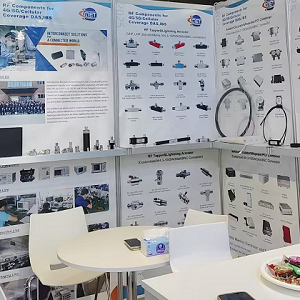 Exciting News: Our Participation at MWC 2025 in Spain!
Mar , 06 2025
Exciting News: Our Participation at MWC 2025 in Spain!
Mar , 06 2025
Exciting News: Our Participation at MWC 2025 in Spain! We are thrilled to announce that our company is participating in the Mobile World Congress (MWC) 2025, taking place in Spain from March 3rd to March 6th. This is one of the largest and most significant events in the telecommunications industry, and we are showcasing our latest Low PIM RF passive components and connecting with industry leaders....
View more
-
Understanding Jumper Cables in RF Systems
Apr , 07 2025
What They Are and Why They Matter Jumper cables, also known as RF jumpers or feeder jumpers, are short coaxial cables used to connect various components in an RF transmission system. Though seemingly simple, they play a crucial role in ensuring signal integrity, mechanical flexibility, and overall system performance in wireless infrastructure. 1. What is a Jumper Cable? A jumper cable is a flexibl...
View more
-
Which Is Better: Directional Coupler or Tapper?
May , 08 2025
In RF and microwave systems, power distribution is a critical aspect that directly impacts system performance, reliability, and design flexibility. Two of the most commonly used passive components for signal splitting and power monitoring are directional couplers and tappers. While they serve similar purposes in many systems, they differ significantly in structure, application, and performance. Un...
View more
-
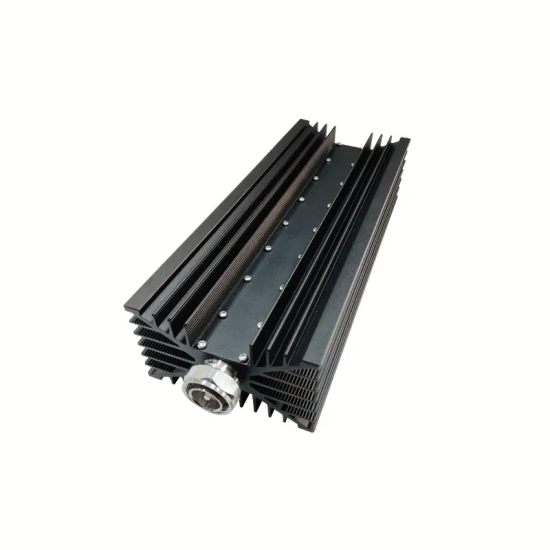 How To Test The Power of a Load
May , 21 2025
How To Test The Power of a Load
May , 21 2025
To test the power of a load, you can follow these steps: Gather Equipment: You'll need a multimeter, wattmeter, or power analyzer, depending on the accuracy required. Connect the Load: Ensure the load (such as a resistor, motor, or appliance) is properly connected to the power source. Measure Voltage: Use the multimeter to measure the voltage across the load. Make sure to set the multimeter to the...
View more
-
Difference Between UHF and VHF Antenna: Choosing the Right Frequency for Your Application
May , 28 2025
What Is a VHF Antenna? VHF antennas operate within the Very High Frequency range of 30 MHz to 300 MHz. These antennas are commonly used in: FM radio broadcasting (88–108 MHz) Marine radio communication (156–174 MHz) Aviation communication systems Emergency and amateur radio operations Due to their longer wavelengths, VHF antennas perform well in open and rural environments where line-of-sight cove...
View more
-
Common Connector Types for RF Passive Components
Jun , 10 2025
In the world of RF passive components—such as couplers, attenuators, splitters, and terminators—RF connectors play a crucial role in ensuring signal integrity, mechanical reliability, and ease of integration. Choosing the right connector is essential for system performance, especially in 4G/5G base stations, DAS (Distributed Antenna Systems), and other high-frequency communication systems. Below, ...
View more