-
 RF Combiner Working Principle and Engineering Analysis
Dec , 13 2025
RF Combiner Working Principle and Engineering Analysis
Dec , 13 2025
In wireless communication systems, the RF Combiner is a critical passive RF component. From an engineering perspective, I will analyze the design, performance, installation, and application of RF Combiners, and provide examples based on representative products from Maniron Electronic. 1. Basic Principle of RF Combiner From an engineering standpoint, the core function of an RF Combiner is to combin...
View more
-
Top 10 RF Passive Components for Reliable Wireless Communication
Dec , 27 2025
In every reliable wireless network — whether it’s a DAS inside a hospital, a 5G macro site, or a public safety system — performance does not start with software. It starts with RF passive components. From our perspective as a manufacturer, most network issues we see in the field are not caused by active equipment failure. They are caused by mismatched, underrated, or poorly selected passive compon...
View more
-
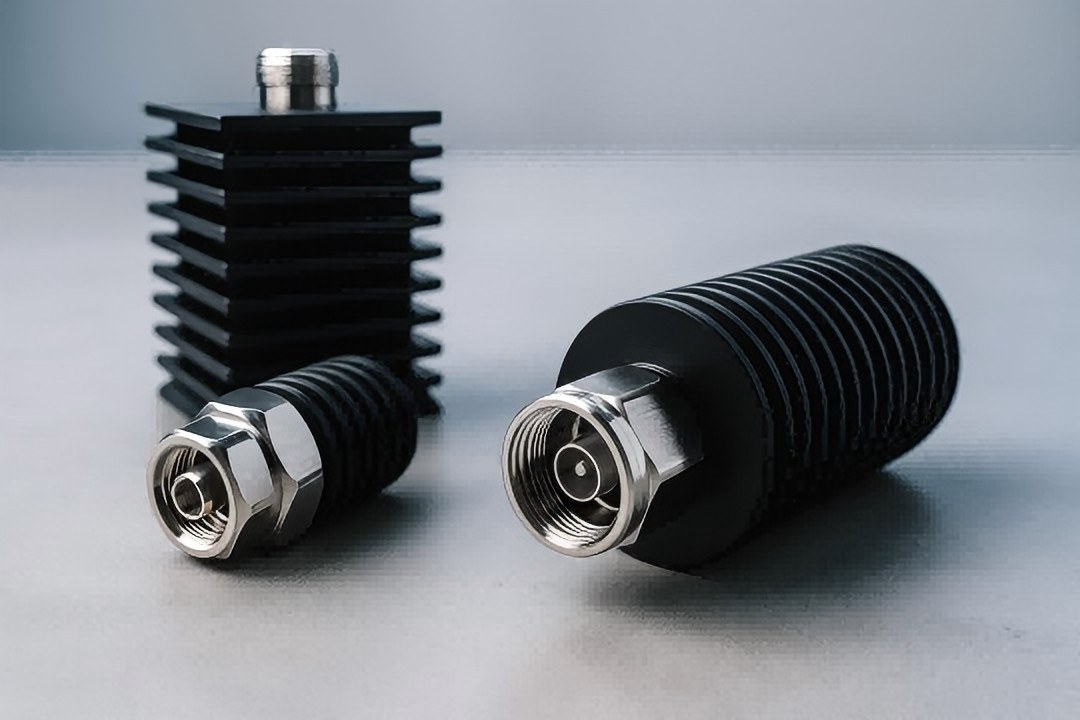 Termination Loads in RF Systems: The Indispensable Anchor of Stability
Jan , 05 2026
Termination Loads in RF Systems: The Indispensable Anchor of Stability
Jan , 05 2026
In RF systems or communication base stations, the Termination Load is a seemingly simple yet critically important passive component. Its role extends beyond merely "absorbing signals" and encompasses system stability, Passive Intermodulation (PIM) control, link testing, and system security. This article will delve into the functions of termination loads within such systems and provide guidance on ...
View more
-
Why Is Tapper an Indispensable Passive Component for Indoor Coverage?
Jan , 17 2026
In the field of mobile communication engineering, the success of an Indoor Distribution System (DAS) depends not on the raw power of the signal source, but on the "art of distribution." As 5G transitions toward Sub-6GHz and higher frequency bands, space path loss and feeder attenuation increase drastically. To achieve seamless "carpet-style" coverage in complex skyscrapers or underground facilitie...
View more
-
RF Triplexer Combiner: A Core Component in Modern Wireless Communication Systems
Jan , 31 2026
In the rapidly evolving landscape of wireless communication, the demand for efficient signal management, miniaturized components, and seamless multi-band operation has never been higher. Among the critical devices that enable this functionality is the RF Triplexer Combiner, a specialized device that integrates the capabilities of signal combining and frequency division to support complex communica...
View more
-
Low PIM and Low Insertion Loss: Key Metrics That Define Real RF System Performance
Feb , 09 2026
In modern wireless systems such as 5G, DAS (Distributed Antenna Systems), private networks, SATCOM, and public safety communications, engineers often focus on baseband units, RF modules, spectrum resources, and algorithms. However, once a system is deployed in real environments — office buildings, airports, tunnels, ships, or macro sites — the actual performance ceiling is usually determined by a ...
View more
-
Maniron China RF Passive Components Factory Supporting Global Telecom Infrastructure
Feb , 26 2026
In today’s global telecommunications industry, network reliability depends heavily on the quality of RF passive components. While active equipment processes signals, passive components ensure those signals are transmitted efficiently, safely, and consistently. As a professional China RF passive components factory, Maniron Electronic has been supporting global telecom infrastructure projects by pro...
View more
-
How to Reduce Third-Order Intermodulation in Passive RF Components
Mar , 05 2026
For engineers working in the passive RF component industry, third-order intermodulation (PIM3) is one of the most challenging performance indicators. As communication networks continue to evolve, mobile operators are tightening their requirements for PIM performance. The standard has gradually moved from -140 dBc to stricter levels such as -155 dBc, -160 dBc, -163 dBc, and even -165 dBc. With more...
View more