-
 Can't understand high gain rf antenna parameters? How to avoid being misled by suppliers?
Nov , 22 2025
In the telecommunications industry, antennas are a type of product that "look similar but vary greatly in performance." Specification tables often fill an entire page, but people from different industry backgrounds interpret these indicators completely differently. Many engineers and purchasing personnel often encounter a dilemma: suppliers explain things convincingly, but on-site testing reveals ...
View more
-
How to Choose 6dB, 10dB, 15dB, or 20dB Couplers
Nov , 29 2025
One of the questions we hear most often from engineers is: “Should I use a 6dB, 10dB, 15dB, or 20dB coupler — and what’s the real difference in coverage?” On paper, these numbers look like simple coupling values. But from more than two decades of manufacturing RF passive components, we know something very clearly: Choosing the wrong coupling value can break your coverage balance, distort the ...
View more
-
What's the Difference Between a Combiner and a Hybrid?
Dec , 06 2025
In RF system design and engineering projects, "Combiner" and "Hybrid Coupler (or Hybrid Combiner)" are often mentioned, but they are not the same. Their applications and performance characteristics differ significantly. Basic Concepts and Technical Differences Hybrid Coupler (Hybrid Combiner) is typically a four-port device based on coupled lines, transmission line theory, or branch-line / ring st...
View more
-
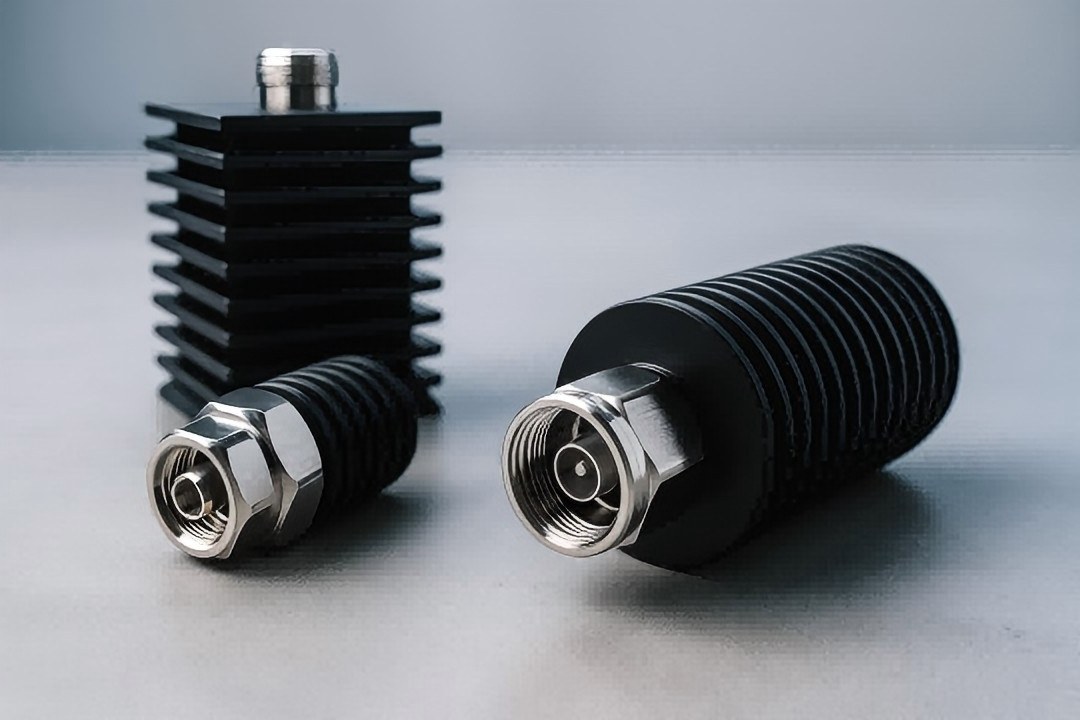 Termination Loads in RF Systems: The Indispensable Anchor of Stability
Jan , 05 2026
In RF systems or communication base stations, the Termination Load is a seemingly simple yet critically important passive component. Its role extends beyond merely "absorbing signals" and encompasses system stability, Passive Intermodulation (PIM) control, link testing, and system security. This article will delve into the functions of termination loads within such systems and provide guidance on ...
View more
-
RF Triplexer Combiner: A Core Component in Modern Wireless Communication Systems
Jan , 31 2026
In the rapidly evolving landscape of wireless communication, the demand for efficient signal management, miniaturized components, and seamless multi-band operation has never been higher. Among the critical devices that enable this functionality is the RF Triplexer Combiner, a specialized device that integrates the capabilities of signal combining and frequency division to support complex communica...
View more
-
Duplexer vs Combiner: Key Differences in RF Communication Systems
Mar , 07 2026
Duplexers and RF Combiners are both used in RF communication systems to manage and transmit signals. Many engineers or system designers sometimes confuse these two devices because they may appear in similar positions within a network architecture. However, in real-world deployments such as 5G networks, DAS systems, and wireless communication infrastructure, they perform very different functions. F...
View more
-
What Is the Coupling of a Directional Coupler and How to Choose the Right Value?
Mar , 14 2026
In modern wireless communication and RF systems, directional couplers are one of the most commonly used passive components. Whether in base stations, DAS systems, or testing and monitoring setups, couplers act as "signal splitters" that help engineers control and measure signals efficiently. Understanding the coupling factor and how to select the appropriate coupling value is fundamental for desig...
View more
-
Can a Power Divider Be Used as a Combiner?
Apr , 25 2026
In RF system design and deployment, one common question often arises: Can a power divider be used in reverse as a power combiner? From a theoretical standpoint, the answer is yes. However, in real-world engineering applications, this practice comes with several hidden risks. If not handled properly, it can degrade system performance or even damage critical components. In this article, we’ll break ...
View more